

Country singer David Allen Coe has a song titled “Actions Speak Louder Than Words,” which could be the theme song for America’s New Majority Project’s latest survey. There’s a line that kept showing up in our survey, in different words but always the same idea: “Don’t tell me things are getting better. Show me at the grocery store.”
America’s New Majority Project asked nearly 900 voters to describe, in their own words, no multiple-choice, what matters most to them right now and what it would take to earn their trust. The answers point to something campaigns should pay very close attention to, which is voters have moved past the debate about whether the economy is an issue. They’re ready for the next conversation. What are you going to do about it, and how will I feel it in my daily life?
That shift matters. Nearly half of respondents said the single most convincing thing a leader could do is deliver visible cost relief on the things they buy every week. More than a third want named policies with real timelines attached. Put those together and roughly four in five voters are essentially saying “Give me something concrete and I’ll listen.” That’s a road sign you can’t ignore this election cycle.
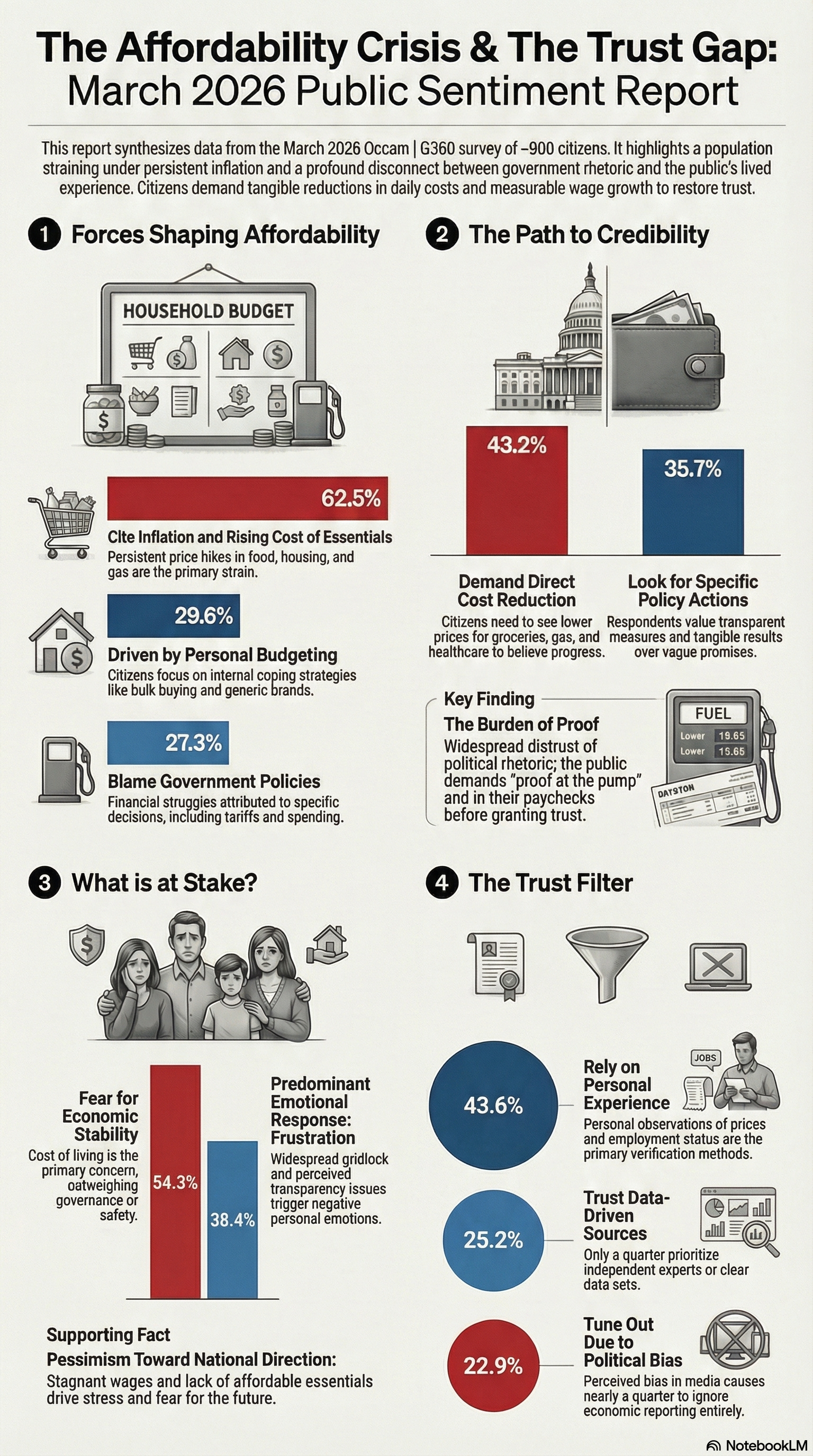
Image generated by NotebookLM using orignal data from ANMP and enhanced by human editing
And here’s what makes the opening even wider: this demand crosses every partisan line. Republicans, Democrats, and Independents all rank kitchen-table costs as their top concern at nearly identical rates. They all apply the same test, “Can I feel it when I fill up the tank, buy groceries, pay rent?”. A candidate who can connect a specific action to a specific result that voters experience in daily life has a built-in audience that includes the middle, not just the base.
The survey also found a constituency that’s been largely overlooked. Rural voters name economics and healthcare access as their dominant concerns — with healthcare running at roughly triple the national average. These are communities dealing with hospital closures, provider shortages, and long drives for basic care. They’re not asking for rhetoric. They’re asking for a doctor within driving distance and prescriptions they can afford. Whoever speaks to that first owns the issue.
What comes through most clearly in the data is that Americans haven’t tuned out. They’ve just raised the bar. They want to feel improvements in their daily lives. Improvements at the pharmacy counter, reductions in their monthly electric bill, and lower prices in the checkout line. The candidate who figures out how to connect policy to that felt experience isn’t just winning a messaging war, they’re meeting voters exactly where they already are.
Like David Allen Coe says, “Actions speak louder than words don’t you know/Flowers all grow from the seeds that we sow/ But a weed’s still a weed boy wherever it grows / And actions speak louder than words.”