

Key Takeaways
Wearable health devices are now mainstream and already influencing behavior for millions of Americans. Nearly half of respondents say they at least sometimes act on wearable prompts related to exercise, sleep, or other health habits.
Americans strongly support integrating wearable data into health care—but they want patients, not institutions, to remain in control of that data.
The biggest divide is generational, not political. Younger Americans are dramatically more likely to trust wearable guidance and embrace wearable-centered health management.
Americans are comfortable with wearable data being used to improve care and support research, but become much more cautious when insurers or commercial entities are involved.
Wearable technology is rapidly changing how Americans think about health care. What was once viewed primarily as a fitness tool is increasingly becoming part of a broader expectation that health care should be continuous, personalized, and patient-directed. Wearable devices are already influencing health decisions for many Americans—especially younger adults—while reinforcing strong support for greater patient control over health data and medical records.
Why it Matters
Wearable technology is accelerating a shift from a health care system built around occasional doctor visits to one centered on continuous monitoring, real-time feedback, and greater patient engagement. Americans increasingly expect health care to function more like modern technology: personalized, accessible, and integrated into daily life.
How to Use This Data
Digital health policy and messaging should focus on patient empowerment rather than institutional data collection. Americans are most supportive of wearable data when it improves care, increases access, and remains under patient control—and become more skeptical when data is tied to institutional or financial leverage.
Wearable Technology Is Becoming Mainstream
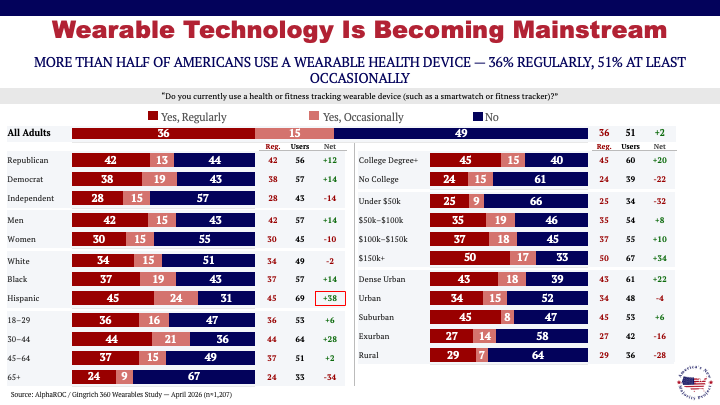
More than half of Americans report using a wearable health or fitness device at least occasionally, including over one-third who say they use one regularly.
Usage is especially high among younger, college-educated, higher-income, and urban or suburban respondents. Age was the single largest demographic divide in the survey, with younger Americans dramatically more likely to use wearable devices and engage with their recommendations than older Americans, who remain more tied to traditional physician-centered care.
Wearables Are Already Influencing Health Decisions
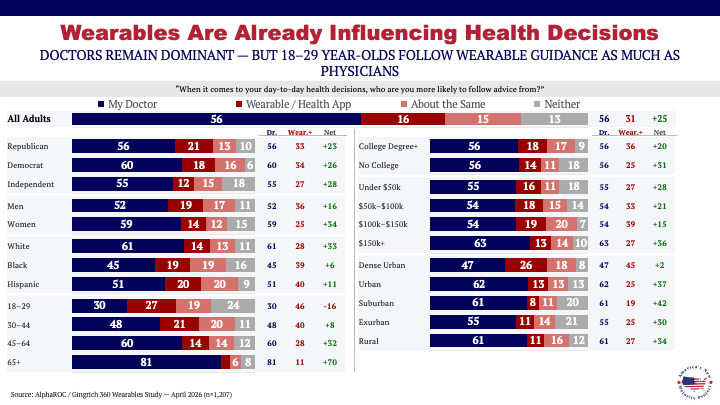
Wearable devices are not simply passive tracking tools. Nearly half of Americans said they at least sometimes act on wearable prompts, such as reminders to walk, sleep, hydrate, or engage in other healthy behaviors. Roughly one-quarter said they follow those prompts often or always.
Doctors remain the dominant source of health authority overall. However, nearly one-third of respondents said they are either more likely to follow wearable guidance than physician advice—or view both about the same—when making day-to-day health decisions. Younger Americans were significantly more likely to view wearable guidance as influential.
Americans Support Integration—But Want Guardrails
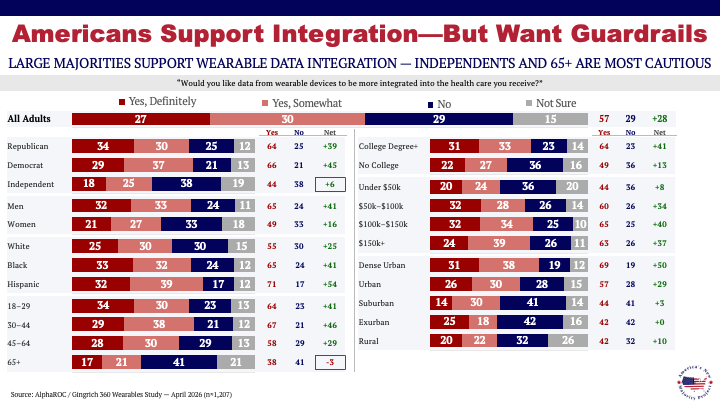
Large majorities said they would like wearable data to be more integrated into the health care they receive.
Respondents were most comfortable with wearable data being used:
to provide personalized health recommendations
to share with doctors involved in their care
to support anonymous medical research.
Support declined when wearable data was associated with insurance companies or commercial product development.
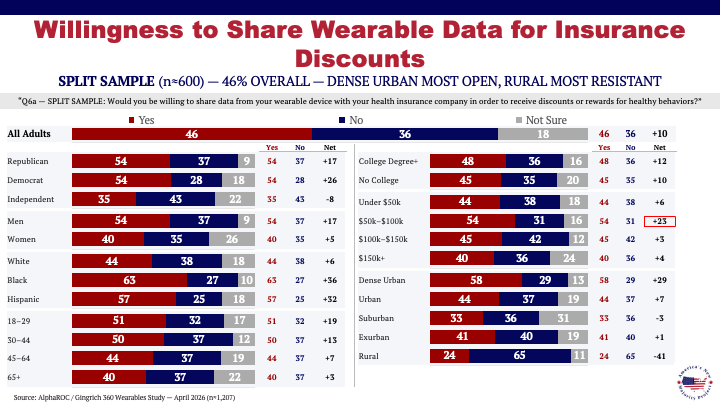
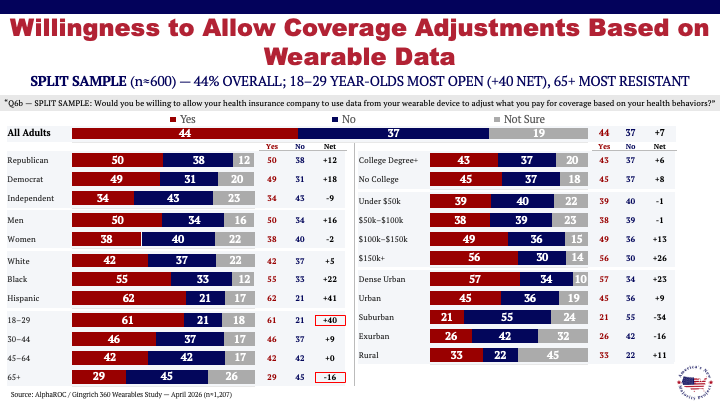
Respondents were also somewhat more supportive of sharing wearable data in exchange for discounts or rewards for healthy behavior than allowing insurers to adjust what people pay for coverage based on those same behaviors.
Overall, Americans appear open to wearable-driven personalization and health incentives, while remaining cautious about institutional or financial uses of personal health data.
Americans Want Greater Control Over Health Data
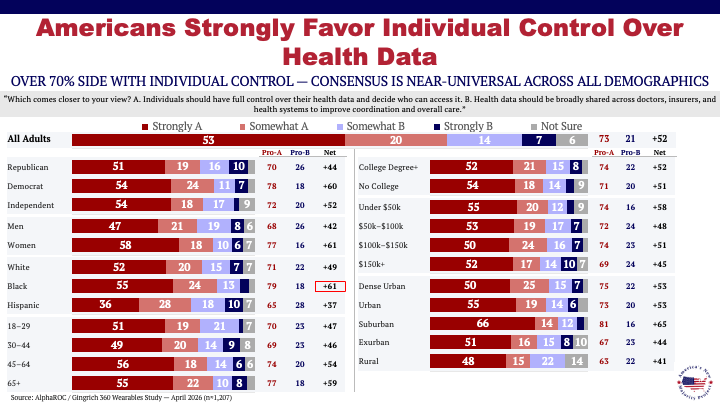
The strongest findings in the survey centered on patient control over health information.
Large majorities agreed that individuals—not institutions—should control access to their health data, including medical records and wearable information.
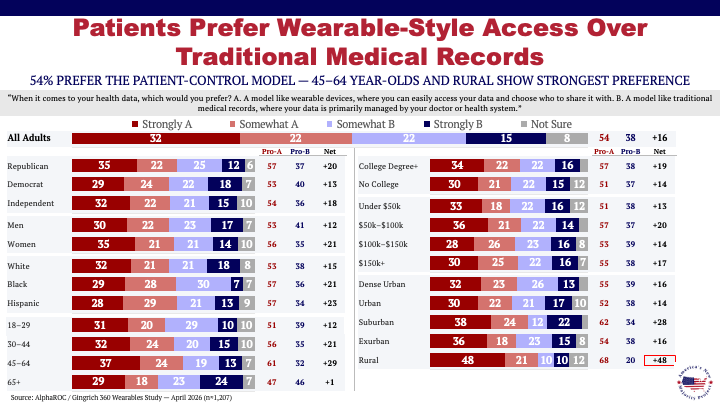
Respondents also preferred a more portable, wearable-style model of health data access, where patients can easily retrieve and share their information, over the traditional medical-record system in which data is primarily managed by doctors or health systems.
Notably, these views showed relatively little partisan polarization, with Republicans and Democrats expressing broadly similar attitudes toward wearable integration and patient access to health data.
The Bottom Line
Americans are increasingly comfortable with technology playing a larger role in health care—but they want that technology to empower patients, not institutions.
The public appears ready for a more continuous, personalized, and digitally integrated health care experience, provided patients remain in control of how their information is accessed and used.
The future of digital health may depend less on technology adoption itself than on whether patients trust that the system ultimately works for them.
What’s Next
We will have more analysis on voter attitudes about pressing issues over the next few weeks as well as updated responses to questions in our continuing posts regarding the 250th celebrations of the Nation.
We want to hear from you! We not only enjoy hearing from our subscribers, but we also use your feedback to bring you the most recent and engaging policy information available. Share how you’re using this data or tell us what new insights you’d like to see.
Get in touch with us anytime, and let’s make an impact together!
I think this information is highly misleading. Younger people do not have health issues and may merely be watching their diet and exercise. Older people are more skeptical because such monitoring may suggest certain medications or make significant errors or be shallow in what information is revealed.