


Key Takeaways
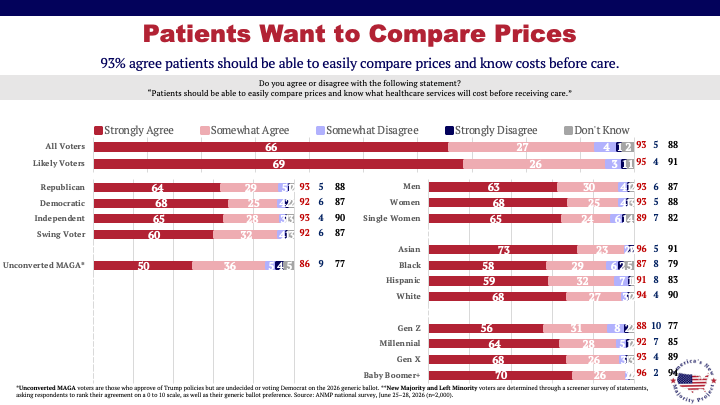
93% of voters agree patients should be able to easily compare prices and know what healthcare will cost before receiving care.
73% consider public hospital price disclosure a major priority, while 79% say the same about requiring insurers to provide advance explanations of costs and coverage.
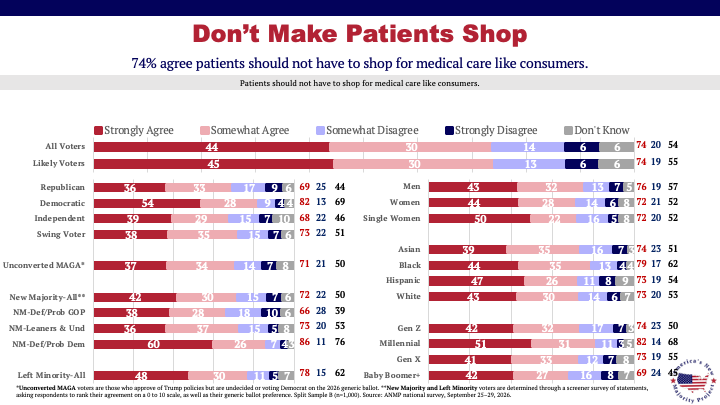
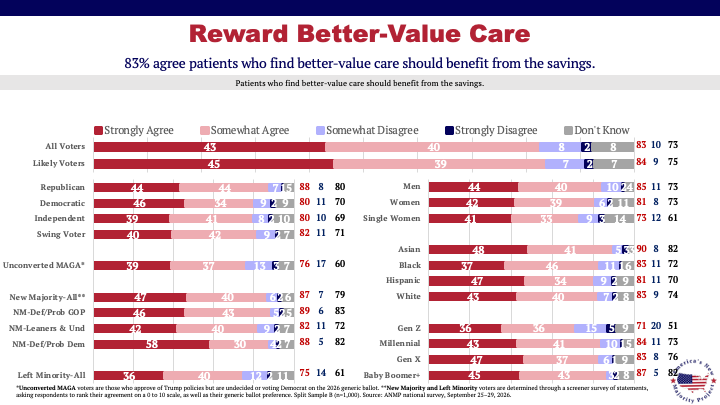
83% agree patients who find better-value care should benefit from the savings. But 74% also agree patients should not have to shop for medical care like consumers.
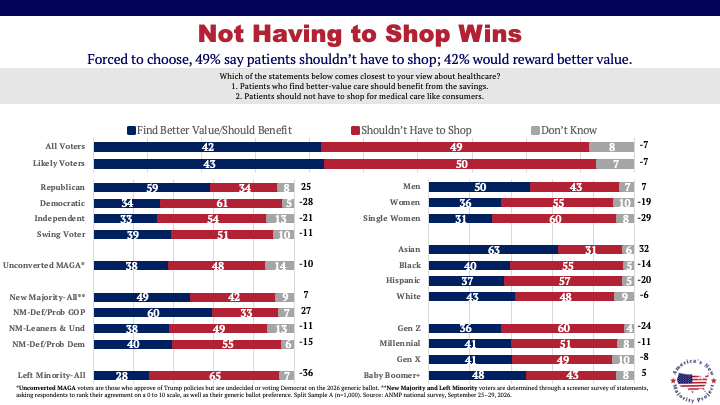
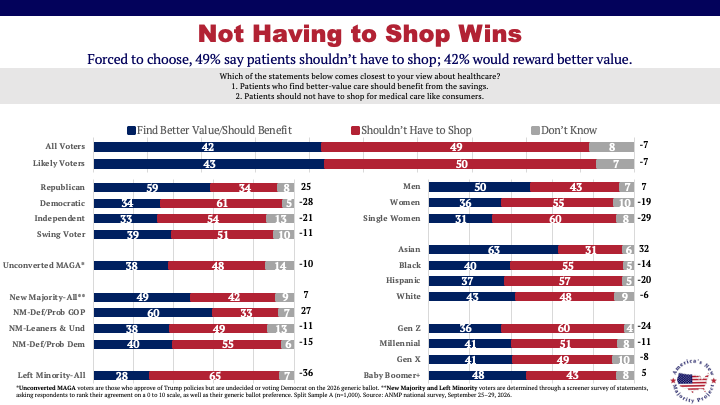
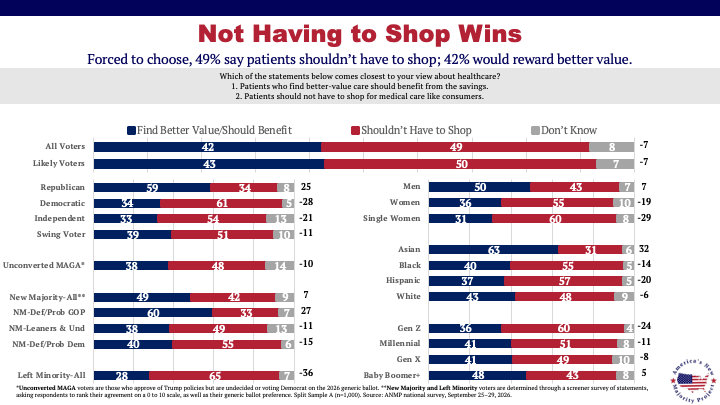
When forced to choose, voters favor not having to shop for medical care over rewarding patients for finding better value, 49% to 42%.
Women, independents, and voters who describe themselves as economically struggling are more likely to say patients should not have to shop for care.
For years, ANMP polling has found strong support for transparency in healthcare and allowing patients to compare prices and know in advance what care will cost. The latest survey, conducted September 25–29, 2026, adds an important qualification: voters want access to prices, but are less enthusiastic about treating medical care like an ordinary consumer purchase.
Why It Matters
Price transparency can help patients make informed decisions and encourage competition, but voters consider medical care to be different from typical marketplaces.
That doesn’t diminish transparency's value. Making prices public holds providers and insurers accountable, exposing excessive charges and unexplained cost differences.
In short, transparency can help fix problems in the healthcare system without requiring every patient to solve those problems individually.
How To Use This Data
Healthcare reform efforts should emphasize:
✓ Giving patients clear, upfront information about total costs and out-of-pocket expenses.
✓ Requiring hospitals and insurers to disclose prices and explain charges so they can be held accountable.
✓ Making it easier—not more complicated—to find affordable, high-quality care.
✓ Allowing patients to benefit from savings without forcing them to become expert healthcare shoppers.
They should avoid:
✗ Treating healthcare like ordinary retail shopping, where consumers are expected to find the best deals themselves.
✗ Emphasizing patients’ responsibility to shop around for care, particularly when they are sick.
Voters Overwhelmingly Support Price Transparency
ANMP’s June 2026 national survey found exceptionally strong support for giving patients access to healthcare prices.
93% agree patients should be able to easily compare prices and know what healthcare services will cost before receiving care.
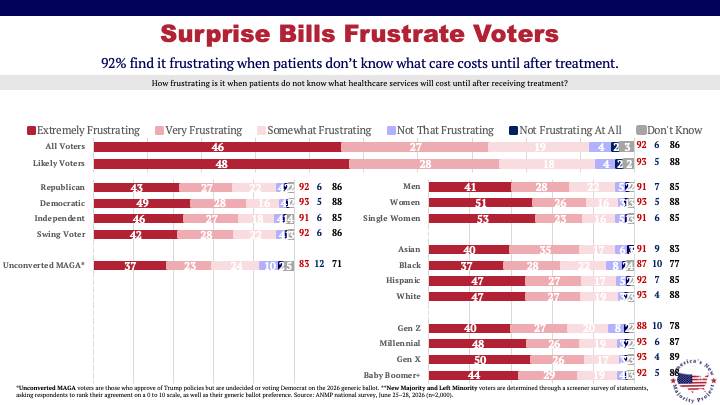
92% find it frustrating when patients do not know what healthcare services will cost until after treatment.
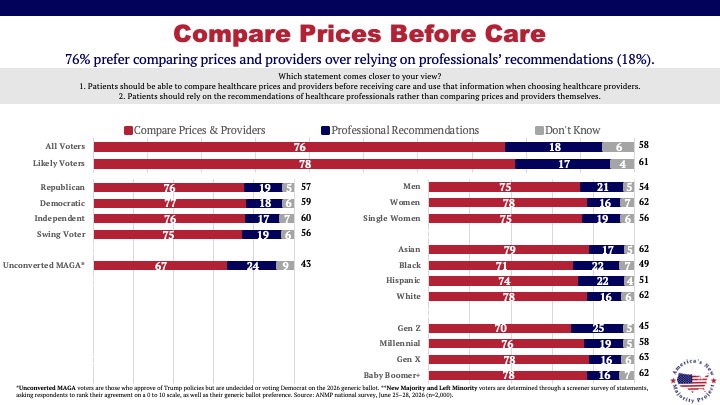
76% prefer allowing patients to compare prices and providers before receiving care over relying on healthcare professionals’ recommendations instead.
78% prefer a healthcare system where patients can compare prices, know what care will cost, and use that information when making healthcare decisions.
In February 2026 ANMP found:
73% considered it a major priority to require hospitals to publicly post prices for treatments and services, including rates negotiated with insurers.
79% considered it a major priority to require health insurers to provide advance explanations of benefits showing estimated total costs, insurance coverage, and out-of-pocket expenses before scheduled medical services.
These findings establish the strength of public support for price transparency and patient access to information.
But Voters Don’t Want to Be Forced to Shop for Care
Our latest healthcare survey tested what happens when the appeal of rewarding patients for finding better-value care competes with the concern that patients should not have to shop for medical treatment.
Asked separately, both positions received strong support:
83% agree: “Patients who find better-value care should benefit from the savings.”
74% agree: “Patients should not have to shop for medical care like consumers.”
But when a separate group of voters had to choose between the two statements:
49% chose patients should not have to shop for medical care like consumers.
42% chose patients who find better-value care should benefit from the savings.
8% were unsure.
The agreement questions and head-to-head choice were asked of separate groups of 1,000 voters.
Women and Independents Are Especially Resistant to Healthcare Shopping
The head-to-head results reveal substantial differences among voter groups.
Gender: Among women, 55% favor not having to shop for medical care, compared with 36% who favor rewarding patients for finding better value. Among men, 50% favor the better-value incentive, compared with 43% who favor not having to shop.
Independents: 54% favor not having to shop, compared with 33% who favor the better-value incentive.
Voters describing themselves as poor: 59% favor not having to shop, compared with 33% who favor the better-value incentive.
The Bottom Line
Americans want to know what healthcare costs, benefit from better-value care, and have greater freedom to make healthcare decisions. But they don’t necessarily want the burden of shopping for medical care.
The central lesson is that messaging around price transparency should emphasize giving patients more information and healthcare institutions more accountability—not giving patients more work.
Healthcare reform should make costs visible, hold institutions accountable, and simplify decisions rather than shift more responsibility onto patients.
McLaughlin & Associates partnered with Gingrich360 to conduct national surveys for America’s New Majority Project. This report draws on three surveys, each conducted among 2,000 registered voters: September 25-29, 2026; June 25-28, 2026; and February 5-10, 2026.
All interviews were conducted online. Survey invitations were distributed randomly within predetermined geographic units. These units were structured to correlate with actual general election turnout.
Each sample of 2,000 registered voters has an accuracy of +/- 2.2% at a 95% confidence interval. The numbers in this presentation have been rounded and may not equal 100%. The demographic profile shown is for the September survey.
What’s Next
We’ll continue examining what ANMP’s latest healthcare research reveals about patient choice, government protections, and the reforms Americans believe will make healthcare work better.
We welcome your feedback and suggestions for additional research.